
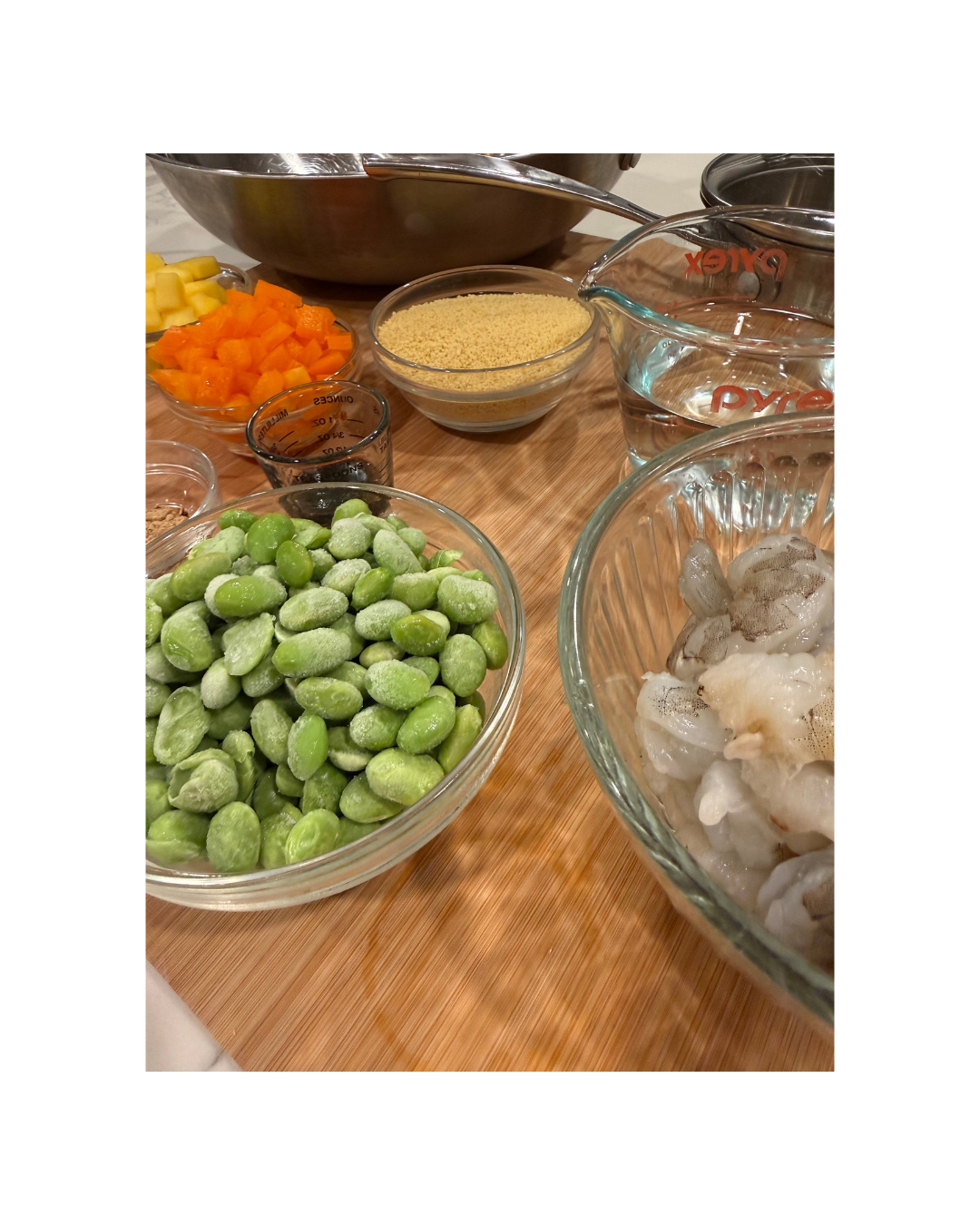
What prompted me to write this blog post was coming home from a day of organizing, exhausted and trying to figure out what to cook for my family. Getting dinner on the table every night can feel like a lot. I started using a website that helped me figure out what to cook each night and even created a shopping list for me. Having two major decisions taken off my plate (pun intended!) felt liberating! Now with those two mental time-sucks out of the way, I could get to the part that I actually didn’t mind, cooking.
Recently, I had another little organizing lightbulb moment.
I was reading the newsletter from this dinner planner when I came across the French culinary term mise en place. It means “everything in its place.”
As I read about the practice of preparing your ingredients, tools, and workspace before you begin cooking, I thought with excitement, Wait. I already do this! Apparently, I’ve been practicing mise en place for years without knowing there was a name for it.
I don’t just prepare the food. I prepare the process.
When I’m making dinner, I don’t usually jump straight into the first step of the recipe. First, I read through the recipe, usually before I go food shopping, to make sure I have everything I need. If you've ever realized halfway through cooking that you're missing a key ingredient, ugh, you know how disappointing that can be.
I then get out the tools I’ll need and measure my ingredients. Once that is done, I put things back where they belong and clean up the workspace before I actually start cooking.
By the time I begin following the recipe, my ingredients are ready, my tools are ready, and my workspace is ready.
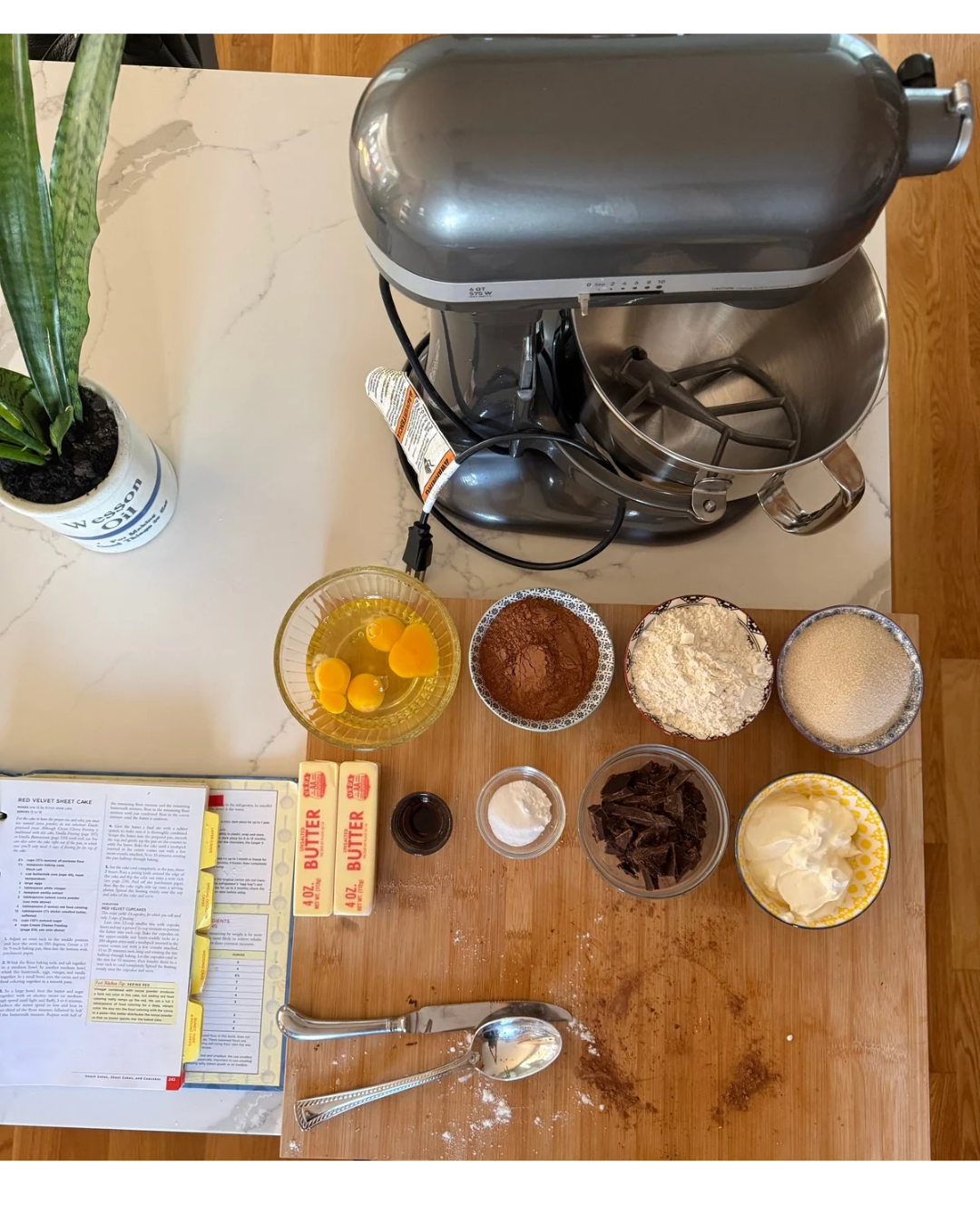
Making cupcakes for Halloween-measuring ingredients ahead of time is a game changer!
I’ve already made several decisions. I’ve already found the things I need. And I’m much less likely to get halfway through a recipe and realize I’m missing something.
I’m not making the recipe easier. I’m making the process of following the recipe easier.
That distinction really stuck with me.
Because I think we can apply this idea to so many things beyond cooking.
Sometimes we need to organize the process, not the stuff
When we think about organizing, we often think about our belongings.
Where should this go?
What should I keep?
What can I get rid of?
What kind of container should I use?
But sometimes the thing that needs organizing isn’t our stuff.
It’s the process.
Think about all of the everyday tasks that feel harder than they should.
Getting everyone out the door in the morning without having to run back in to get something that was forgotten. Packing lunches. Doing laundry. Paying bills. Getting ready for a trip. Starting a project at work.
Sometimes the task itself isn’t particularly difficult. It’s everything surrounding the task that makes it feel overwhelming.
You have to figure out what you need, find it, remember what you were doing, make several decisions, and switch between different steps.
Suddenly, a task that should take 20 minutes has become an exhausting mental project.
What if, instead, we prepared for the task before doing the task?
Gather what you need.
Make a decision ahead of time.
Set up your workspace.
Write down the steps if you need to.
Put things back as you go so you don’t create another task for yourself at the end.
None of these things changes the task itself. But they can change how much mental energy it takes to get through it.
A little preparation can reduce mental load
This is one of the reasons I think mise en place connects so nicely with organizing, particularly for people who struggle with executive functioning.
Every time we eliminate a decision, a search, or something we have to remember, we make daily transitions easier and reduce some of the mental effort required to keep moving.
This doesn’t have to mean creating elaborate systems for everything.
Sometimes the simplest preparation is the most helpful.
If you’re going to make muffins tomorrow morning, put the recipe where you can find it tonight.
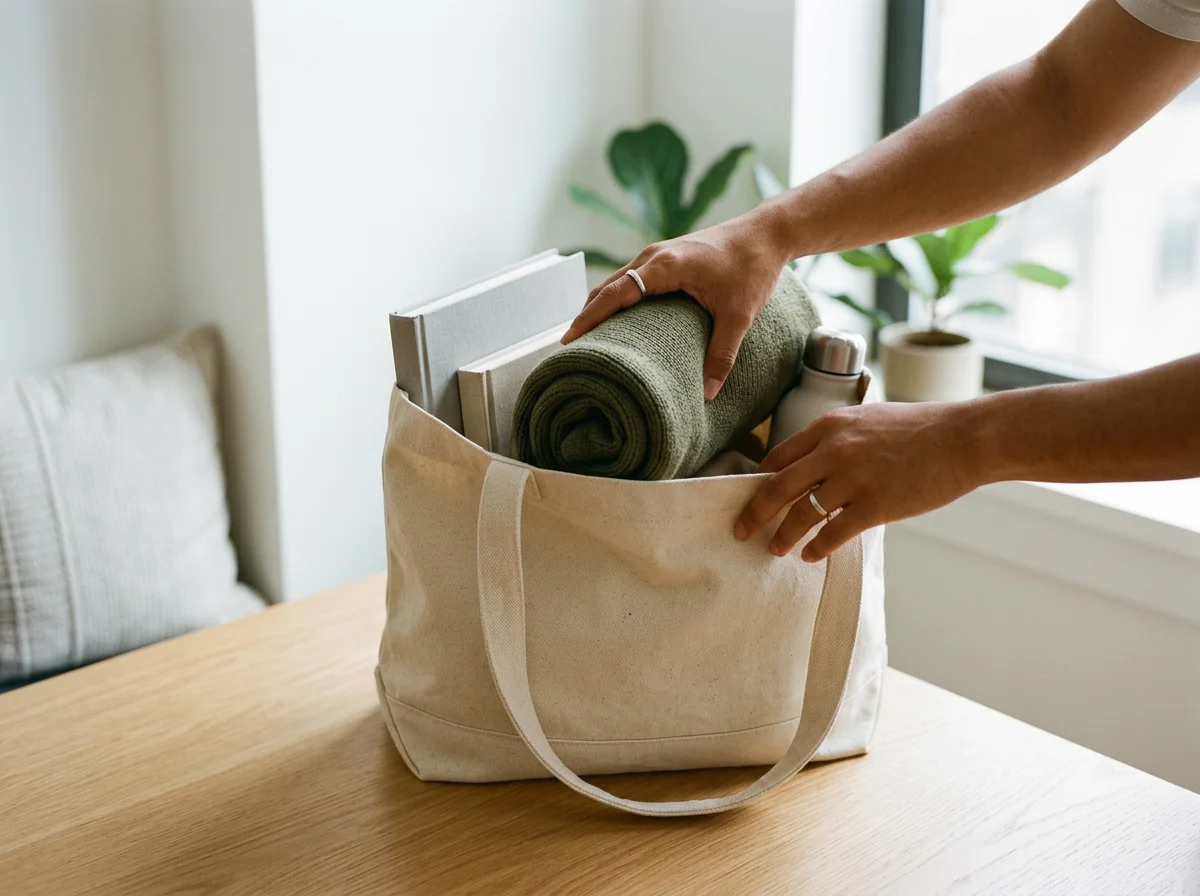
If you need to bring something with you when you leave the house, put it by the door.
If you’re going to work on a project, gather the materials before you sit down.
If dinner is already planned, you’ve eliminated one more decision at the end of a long day.
The goal isn’t to make your life perfectly organized. It’s to make the things you already have to do a little easier.
What if the problem isn’t the task?
I think that’s what I love most about mise en place.
It doesn’t require me to work harder. It simply asks me to think ahead for a few minutes.
Those few minutes of preparation can make the actual task feel much more manageable.
So the next time something feels overwhelming, instead of asking yourself:
“Why am I having such a hard time doing this?”
Try asking:
“What could I do before I start that would make this easier?”
Could you gather what you need?
Make one decision ahead of time?
Clear a little space?
Write down the steps?
Remove one unnecessary choice?
Set up your environment so the next step is obvious?
You might find that you don’t need more motivation.
You might just need a little mise en place.
Because sometimes organizing isn’t about organizing our stuff at all.
Sometimes we’re organizing the process so that life can flow a little more easily.
And that, to me, is what good organizing is really about.
