
Why Decluttering Might Not Be Working(and How to Finally Make It Stick): A real-life approach to organizing your home in a way that actually lasts.
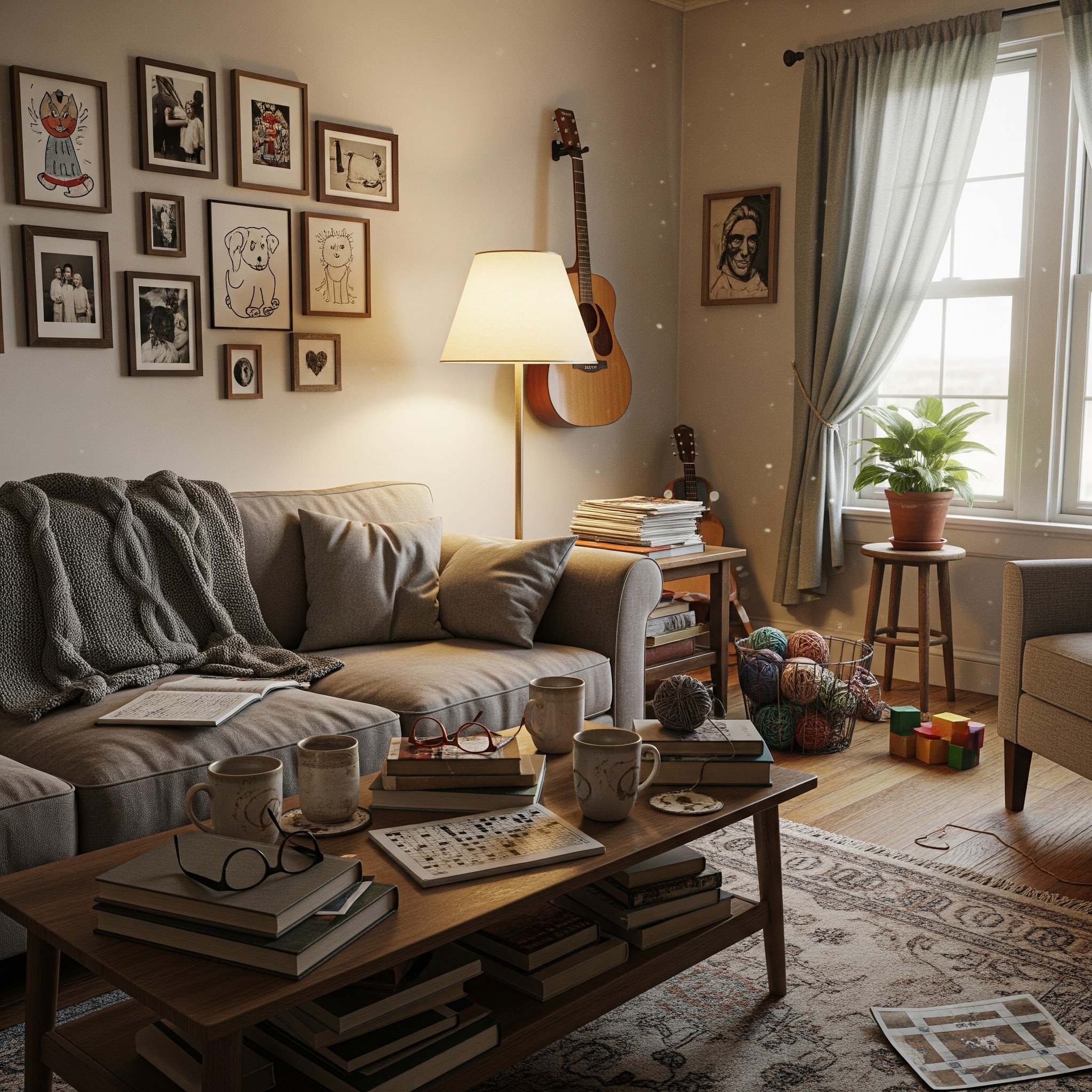
Real homes aren’t perfect—they’re lived in.
Why Decluttering Might Not Be Working for You
We all have that vision in our minds about what a home should look like—you know the ones: the perfectly styled spaces from IKEA, West Elm, or Crate & Barrel catalogs.
But for the majority of us, those spaces aren’t realistic.
Because we don’t live in showrooms—we actually live in our homes. And living can be messy.
A full day of working hard…
Coming home, dropping your bag…
Getting the kids to practice…
Reminding (or nagging) them to hang up or put their things away…
And then figuring out what everyone is going to eat for dinner.
Exhausted yet? You should be.
So when your home doesn’t look or feel “put together,” it’s easy to think you’re the problem—that you just need to try harder or declutter your home more.
But that’s not the real issue.
Instead of expecting your home to be showroom-ready, what if you embraced the fact that it’s lived in—and created a space that supports your real life?
A home where:
You know where your things are
You can access them easily
And you have simple systems for putting them back
Because home organization isn’t about perfection—it’s about functionality.
If only it was as simple as YES or NO- Decision fatigue is real.
Decision Fatigue is Real
If you’ve tried to declutter and organize your home before and it didn’t stick, you’re not alone. And more importantly—it’s not a personal failure. Every item you pick up requires a choice, and those choices add up quickly.
Decluttering your entire home in a weekend might sound productive, but it often leads to overwhelm and exhaustion. Instead, take a realistic approach. Build your stamina over time with simple decluttering and organizing wins.
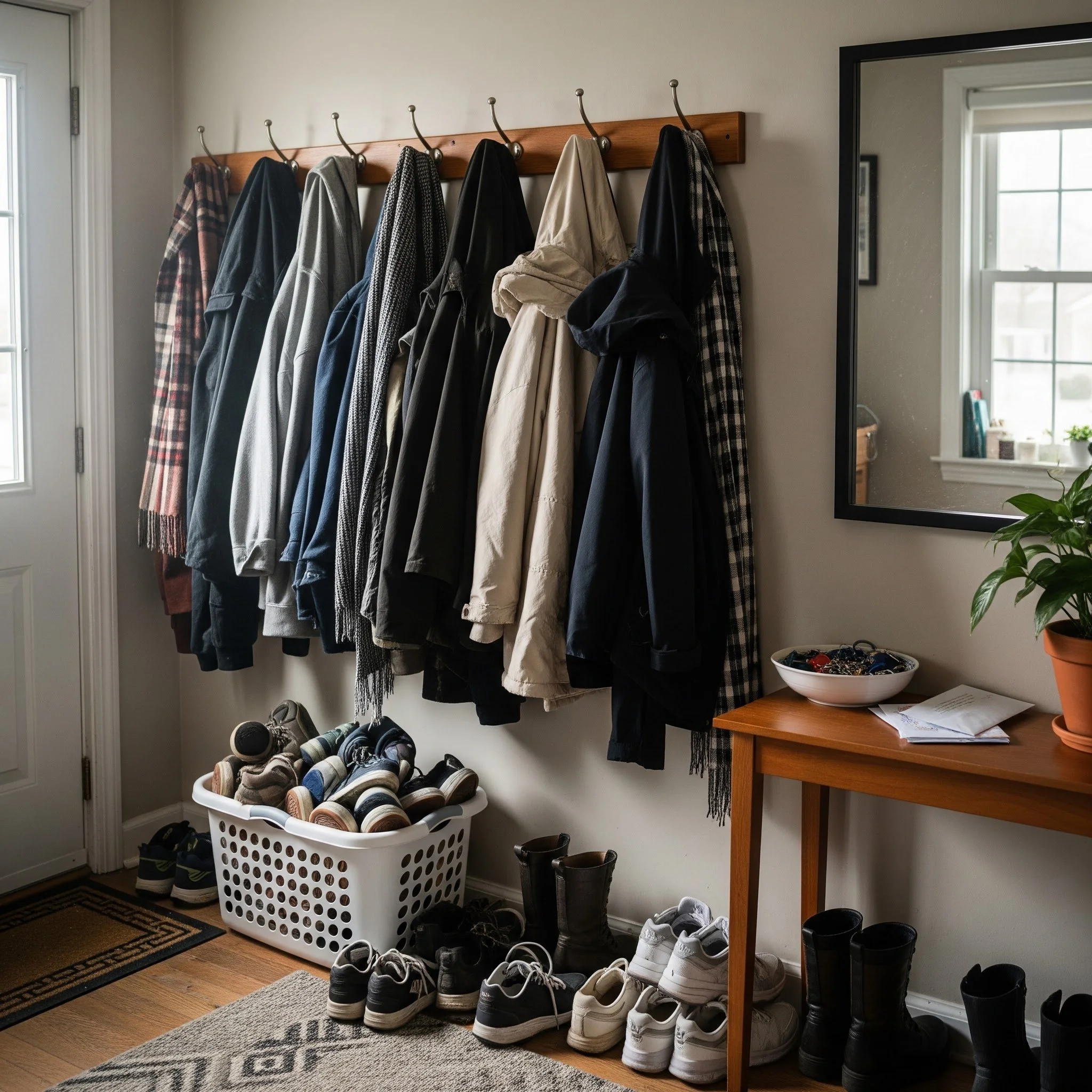
Organizing for your real life—not your “ideal life”—also makes a big difference.
For example, you might picture a beautifully styled entryway with shoes neatly lined up on a rack. But in reality, your family kicks their shoes off as soon as they walk in.
A basket by the door may not match the “ideal” image—but it works. It contains the clutter, makes cleanup easier, and fits your daily habits.
The Missing Piece: Systems That You Can Keep Up With
Once decluttering is complete, that’s when home organizing systems come into play.
These systems should:
Match your daily habits
Be easy to maintain
Require low effort to use
Low-effort systems lead to long-term success.
And here’s something important to remember: You will likely need to reset your systems from time to time—and that’s not failure. It simply means you’re living your life.
The shoe basket example is a perfect illustration of a simple functional home organization system that works with your routine instead of against it.
Start with a plan and start small.
What Actually Works When Decluttering
When you’re ready to begin, start small.
Make a list of the rooms you’d like to tackle, then choose just one space. Within that space, focus on a single area—this is one of the most effective decluttering strategies.
For example, a living room is often a shared, multi-use space. A bookshelf filled with kids’ art supplies, games, and books can quickly become overwhelming.
Instead of tackling everything at once, break it down. Below, I walk through simple steps to declutter a bookshelf—based on a real session I did with one of my clients.
Step 1: Empty and Sort
Work one shelf at a time. As you remove items, sort them into categories like art supplies, games, books and miscellaneous. Create clear boundaries for each category using boxes, bins, or even towels on the floor. Keep a trash bag and recycling bin nearby. It is also helpful to have a box or bin for items you will donate.
Step 2: Declutter by Category
Start with the category that has the least emotional attachment. This builds momentum and makes decision-making easier.
As you choose items to donate or recycle, think about where the remaining items are actually used. For example, if your kids do crafts at the kitchen table, it may make more sense to store art supplies there instead of the living room.
Using tools like a three-tier rolling cart can make items mobile and easy to put away when needed—great for functional home organization.
Step 3: Create Habits That Stick
Once everything has a home, the goal is maintaining it.
When items are easy to access and return, it becomes much easier to stay organized. A helpful rule: if something takes two minutes or less to do, do it now. For example, put those markers and paper back onto the three-tier rolling cart when they aren’t in use anymore. That should take 20 seconds, tops! Your future self will thank you.
Small, steady progress really does win the race. Focus on what you can do right now—not what you think you should be doing.
A Different Way to Think About Your Home
No matter your style, energy level, or family structure, your home should support you—not drain you.
It’s okay if it doesn’t look perfect.
Even as a professional organizer, my home isn’t perfect—and it’s not meant to be. What matters is that it works.
It’s about pacing yourself, recognizing when you need a reset, and understanding that this will look different at different times in your life.
Be kind to yourself as you move through this process.
Because in the end, it’s not about perfection—it’s about progress.
You Don’t Have to Do This Alone
If you’re feeling stuck or overwhelmed, you don’t have to figure this out on your own.
At Green Earth Organizing, I help create sustainable, functional systems that are tailored to your life—so your home feels easier to live in, not harder to manage.
